SUMMARY: Here is a study that uses wrist-worn accelerometer data to break new ground with…
THE IMPORTANCE OF DOING HARD THINGS: CARDIO EDITION #2
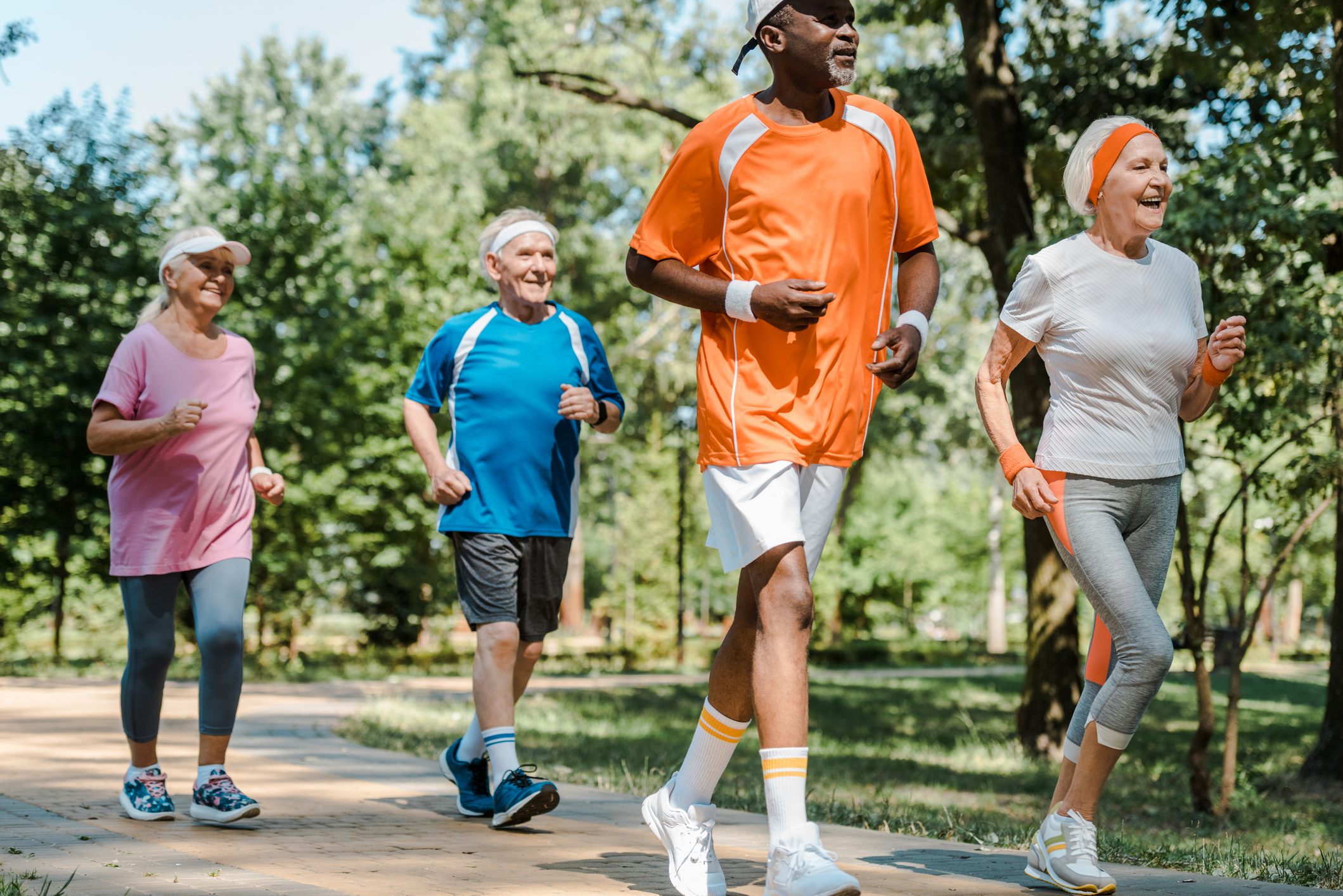
SUMMARY: Older adults (OAs) should prioritize the important actions that support successful aging like cardio exercise training to improve aerobic fitness capacity and resistance exercise to improve strength, power & muscle mass. This post’s main point is that cardio exercise performed with the appropriate frequency & intensity to raise aerobic capacity is exceedingly health protective and hence super important to age well. I’ve previously discussed several large-scale studies, with nearly one million subjects in total, which show a strong inverse relationship between levels of cardiovascular (aerobic) fitness and risk of dying of all causes; but these studies assessed aerobic fitness at only a single point-in-time. Below, I highlight a large study that assessed mortality risk when our aerobic fitness levels change over time. This study shows that relatively small positive changes in our aerobic fitness can substantially reduce our risk of dying, with the converse being true for negative changes in fitness. This study also showed that achieving a very high level of aerobic fitness is particularly protective & provides a “buffer” from mortality risk even if some aerobic fitness is subsequently lost – this is an extraordinary finding very relevant for OAs, and points to the protective significance of maximizing physical/functional reserve levels for OAs to avoid death & disability.
INTRO
I recommend reading my previous post “The Importance of Doing Hard Things: Cardio Edition”, but to recap that post, I covered: a) the importance of optimizing our blood’s circulation ability to age well; b) the compelling scientific support for optimizing our aerobic capacity – in particular studies by Drs. Steven Blair, Kyle Mandsager, and Peter Kokkinos; and c) the 10-Point RPE scale, the most accessible method to estimate your cardio exercise intensity.
Drs. Blair, Mandsager, and Kokkinos’ work yield some key overall points:
- The studies had strongly significant and strikingly consistent results supporting the idea that aerobic capacity is strongly protective for risk of death.
- The greatest proportional longevity benefit was associated with avoiding the lowest aerobic fitness categories: even achieving just moderate aerobic fitness produced major decreases in all-cause mortality – this is encouraging! – you can reap major benefits just by putting in a modest effort consistently.
- Notwithstanding #2, for OAs in particular, there appears to be no ceiling for aerobic fitness benefits – the fitter you are, the lower your death risks. The lowering of mortality risk from highest to lowest aerobic fitness levels can be 500%!
CHANGING AEROBIC FITNESS AFFECTS MORTALITY RISK
Dr. Peter Kokkinos is a rock star researcher! Not only did he conduct the largest of the previous studies referencing one-time-measured aerobic fitness levels & mortality, but he used the same cohort of middle-aged/OAs from the Veterans Administration to conduct the current study, which documents the effect changes in aerobic fitness have to our risk of dying.
This study had 93,060 participants (5.5% female & 20% black). Average age for males/females was 61/57, respectively. All subjects completed two exercise treadmill tests (ETT) separated by an average of 6 years. All subjects had no evidence of cardiovascular disease (CVD) for the initial ETT. After the initial ETT, subjects were assigned to four age & sex-specific fitness groups termed quartiles (Q) based on peak aerobic capacity measured in metabolic equivalents (1) which is abbreviated as METS: least fit (Q1) to highly fit (Q4).
After the second ETT, each fitness quartile was further stratified based on whether subjects’ aerobic fitness capacity a) increased; b) decreased; or c) didn’t change by at least 1 MET. 25% of subjects experienced no change in aerobic fitness capacity; 29% experienced an increase in fitness; and 46% had a decrease in aerobic fitness. After the second ETT, the average follow up time was 6.3 years.
Key findings:
1) Changes in aerobic fitness capacity (up or down) of greater or equal to 1 MET were associated with inverse and proportional changes in mortality risk.
2) For example, for the lowest fitness quartile (Q1), a decline in aerobic fitness capacity of greater than 2 METS saw a 69-74% increased risk of death.
3) Most of the reduction in all-cause mortality was captured by a greater than 2 Mets improvement from the initial ETT.
4) Those in the highest fitness quartile (Q4) had an eye-opening result: those who didn’t develop CVD saw no significant increase in mortality EVEN IF THEIR FITNESS DECREASED. But when subjects in this group did manage to increased their aerobic capacity by more than 2 METS on retest, they saw the greatest decline in mortality of all the groups.
HAVING PHYSICAL RESERVE CAPACITY IS HUGHLY IMPORTANT
For any functional attribute (domain), your reserve capacity is how much physical capability you have left over compared to resting levels or what’s needed for basic daily life functioning – just consider the definition of a MET (1) – the more METS you achieve on an ETT, the greater your aerobic reserve capacity. A high reserve means lots of potential to meet varying physical challenges, while low reserves means that even low levels of challenge are near your maximum capability and could erode away completely if subjected to a period of inactivity or dis-use.
The most significant take-away from Dr. Kokkinos’s study: It’s exceedingly important to have a high aerobic reserve capacity to age well. Why? Let me re-emphasize key finding #4: For subjects with the highest level of aerobic fitness (Q4), even if their fitness declined, it didn’t increase their risk of dying during the study period (unlike the 3 other lower-fitness Qs). They (Q4) literally got a “hall pass” from death from being very fit!
For OAs, we see this concept of reserve capacity played out in real life to tragic effect all the time. If something happens that creates a period of physical inactivity (surgery, sickness, injury), OAs are disproportionally incapacitated compared to younger age groups because they have less reserve capacity than younger adults. The period of dis-use creates negative physical mal-adaption which can erode away ALL of an OA’s physical reserves. This is why OAs have a much harder time “bouncing back” physically than younger people – indeed it’s all too common for many OAs to never recover their pre-malady functional abilities.
The benefits of having a high reserve capacity for OAs is supported by the findings of Dr. Mandsager’s study detailed in my previous post. In his study, they separated subjects into 5 aerobic fitness groups and compared the risk of dying between each group. When looking at the mortality risk reduction between the two highest aerobically fit groups (above average to elite group), only the 70+ age group reached statistical significance, which suggests that maximizing aerobic fitness is particularly important for OAs aged 70 and over.
So, all these studies clearly support the idea that working toward a higher aerobic fitness level is a very good health investment! A broader lesson is OAs interested in optimal aging need to work on expanding their reserves in other physical domains too, like strength, power, muscle mass, balance & agility, walking speed, walking stride length & gait adaptability, and joint-tissue mobility.
IMPROVING YOUR AEROBIC FITNESS CAPACITY
Improving your aerobic capacity by 1-2 METS is doable: Dr. Leonard Kaminsky & colleagues, in a clinical commentary on Dr. Kokkinos study, discuss some of the scientific support for this concept, mentioning the Heritage Family Study, which “showed that most adults who begin a moderate-to-vigorous aerobic exercise program can significantly increase their cardiorespiratory fitness by 1 to 2 METs, with greater volumes of exercise leading to greater improvements in cardiorespiratory fitness”.
In daily life, improving your aerobic capacity comes down to how you combine your aerobic (cardio) exercise frequency, intensity and volume (2). There is an interaction between intensity and volume: If you want to go easy all the time, it can take a lot of exercise volume to raise your aerobic capacity. In general, the more intensity you can bring, the less volume you will need to improve your aerobic fitness capacity. This is reflected in the current aerobic exercise recommendations as one minute of vigorous intensity exercise is given the same weight as 2 minutes of moderate intensity exercise. Here is the current WHO aerobic exercise recommendations/guidelines:
1) At least 150 minutes per week of moderate intensity exercise, and/or
2) 75 minutes of more vigorous intensity exercise
To help quantify cardio intensity, in my previous post I discussed a very useful tool to estimate your cardio exercise intensity, the 10-point RPE scale, as well as many tips for using the 10-point RPE.
If you’re new to cardio, first priority is to develop some level of exercise consistency at whatever level of intensity is doable for you. If you’re already pretty consistent and have no medical or physical reason not to, upping your intensity, at least some of the time, will yield the best results for your aerobic fitness.
Upping your cardio intensity is about being comfortable pushing yourself into periods of slightly higher intensity than you are accustomed to – these are called higher-intensity “intervals”. If you’re physically capable, start with brief periods of higher intensity intervals interspersed with lower periods of recovery intervals and see how your body responds. If everything is working out, then very gradually add additional higher intensity volume. This undulating higher-lower intensity strategy will work for any aerobic exercise modality: walking (3), stationary bikes, elliptical trainers, stair climbers, rowers, Nordic ski machines. If you use a treadmill, a must read is my post “Treadmills & Seniors: The Rules of Engagement”; Google analytics tells me this is consistently the most frequently read blog post I’ve created.
There is A LOT of science about the best ways to raise your aerobic capacity – you can literally watch/listen to podcasts forever on this topic and get into the minutia of the 5 “zones” of cardio-training intensity.
However, if you’re serious about pushing yourself into some extra cardio intensity, it’s more useful to know there are time-efficient, well-studied, scientifically-proven, higher intensity exercise protocols that are effective for improving aerobic capacity; one of the most time-tested is the “Norwegian 4×4” (4), first developed by the Norwegian University of Science & Technology (NTNU). The Norwegian 4×4 has been extensively studied for 25 years with diverse populations with CVD, hypertension, diabetes, heart failure, obesity, metabolic syndrome, and many others, including studies with OAs.
The One Minute Workout by Dr. Martin Gibala (5) outlines many relatively short-duration interval training protocols proven to raise aerobic capacity (and yes there’s a “The Beginner” protocol). These protocols follow the pattern of warmup & cooldown at beginning/end (6); high-intensity interval immediately followed by a low-intensity interval to recover; repeat this high-low interval pattern a specified number of times.
Some protocols from the book I’ve tried and used successfully (7), are:
1) Norwegian 4×4 (4)
2) Basic Training 3×5 (8)
c) 10×1 (9)
The most vital point to emphasize about this section on cardio intensity is: If you are physically capable and don’t have a medical reason that precludes it, ANY amount of higher intensity cardio is helpful – you don’t need to feel boxed-in with a specific protocol or work/recovery interval – it could be brief higher intensity intervals 5-10 seconds long interspersed with recovery intervals as long as you need or desire. But whatever the intensity you choose, it’s important to understand you will need to make a consistent effort of some type to realize the benefits of aerobic fitness.
Footnotes:
(1) Your aerobic capacity is also called your cardiovascular fitness capacity or cardiorespiratory fitness capacity. Aerobic capacity is commonly expressed as VO2 Max, and is often measured via a graded exercise test, most often a maximal treadmill test or treadmill stress test. When using a well-studied & standardized protocol for the treadmill test, the maximum duration and grade of incline you’re able to achieve provides a very close estimate of your VO2 Max. VO2 Max is most often expressed in METs, which stands for metabolic equivalents. One MET is the amount of oxygen we use while at rest, which when expressed in relative terms, is 3.5ml/kg/min (milliliters of oxygen per kilogram body weight per minute). The more METs you can achieve during a graded exercise test, the greater your aerobic fitness capacity. You can think of your max MET capacity as your aerobic reserve capacity over & above resting levels, or how high you can “rev” your aerobic engine above resting to meet life’s challenges or even a buffer against a period of dis-use which will erode your aerobic fitness.
(2) Your aerobic (cardio) exercise “volume” is the duration of each individual bout of aerobic exercise plus the overall frequency of bouts that you perform over a specific time period, like a week or month.
(3) For OAs, there is some evidence that increasing walking speed increases falls risk. There’s also a ceiling to how fast you can walk. That’s why I’m a big fan of hill walking to add intensity – It’s a slower, safer pace, but also lots of upside potential on intensity.
(4) The Norwegian 4×4 is: Four, 4-minute intervals of higher intensity exercise, separated by 3-minute recovery intervals at low intensity, with a 3-minute warmup & 2-minute cooldown.
(5) Martin Gibala, Ph.D., is a well-respected Canadian exercise scientist at McMaster University who researches high intensity interval training.
(6) I think the warmup and cooldown are particularly important for OAs. It’s never a bad idea to extend the warmup/cooldown times specified in the book as needed, but definitely don’t cut them down or exclude them.
(7) I personally perform these higher intensity protocols either walking on a steep hill or using an Assault Bike where you pedal with legs and push/pull with arms.
(8) The Basic Training 3×5 is: Five, 3-minute intervals of higher intensity exercise, separated by 3-minute recovery intervals at low intensity, with a 1-to-3-minute warmup & a 1-to-3-minute cooldown (For OAs, I’d recommend the full 3 minutes each).
(9) The 10×1 is: ten, 1-minute intervals of higher intensity exercise, separated by 1-minute recovery intervals at low intensity, with a 3-minute warmup & a 2-minute cooldown.

Related Posts