
“You get what you train for” is an axiom often heard in sports training, but…
THE IMPORTANCE OF DOING HARD THINGS: VILPA EDITION
SUMMARY: VILPA stands for Vigorous Intermittent Lifestyle Physical Activity, which is defined as “brief bouts of non-exercise vigorous PA occurring during daily living”. The study discussed this post shows that amazingly small amounts of VILPA (3 to 4 minutes/day) can have strikingly large positive impacts on health & mortality risk reduction. The present VILPA study shows that challenging & vigorous physical activity can arise from structured exercise sessions or daily life activities – our bodies can’t tell the difference. In this, my fourth “Importance of Doing Hard Things” post, the main message remains that aging bodies tend to thrive on physical challenge & intensity and will respond positively regardless of setting or circumstances. So, older adults here’s the program: If you are medically, orthopedically and energetically able, it pays off to challenge yourself regularly with some intensity, even if it’s just done in very short bursts of activity at a time.
INTRO
This is my fourth “The Importance of Doing Hard Things” post. The point of these posts is the intensity of your physical effort matters for positive aging, fitness & health outcomes. For older adults (OAs) especially, there seems to be the temptation to water down the importance of intensity in favor of “just do something” or “get your steps in”. OK sure, I get that, since probably any physical activity (PA) that helps you avoid being completely sedentary is a positive. BUT realize this minimalist intensity philosophy is a PA “floor”, not an (effort) “ceiling” – the more challenge & intensity you put into your PA, the more positive results you’ll likely get out if it (all things being equal).
The science supports that PA intensity is one of the most important drivers for health, fitness and longevity benefits. Why? To age well, we require sufficient PA intensity to drive the physical adaptations our bodies need to stave off the physical declines of the aging process and reduce our risks for the chronic degenerative diseases of aging.
So, again, the main message of “The Importance of Doing Hard Things” series of posts is: If you are medically, orthopedically and energetically able, it pays off to challenge yourself regularly, even if it’s just done a little bit at a time in short bursts of PA.
VILPA CONCEPTS & BACKGROUND
This post covers a study by Emmanuel Stamatakis, Ph.D., from the University of Sydney, Australia, that used wearable device technology using AI (Machine Leaning with Random Forest) to track and stratify the intensity & amount of daily PA. Wrist-worn accelerometers sample PA in 10 second intervals and can capture not just activities that are “structured” exercise, but importantly, also lifestyle-associated movement. This use of contemporary technology for PA data collection differs from most past studies which relied on subject’s self-reported PA recall. Self-reported recall via questionnaire will typically only include structured exercise PA because this type of PA is performed in time blocks long enough to be recalled (typically 10 minutes or longer).
So, what is lifestyle-associated movement (or PA)? Well, it’s mostly activities of daily living (ADL) you choose to engage in or have to engage in during daily life. This post is about a particular type of lifestyle-associated PA termed VILPA, which stands for Vigorous Intermittent Lifestyle Physical Activity, which is defined in the study as “brief bouts of non-exercise vigorous PA occurring during daily living”.
This study shows that amazingly small amounts of VILPA (3 to 4 minutes/day) can have surprisingly & strikingly large positive impacts on health & mortality risk reduction. And, these results show once again that, when it comes to aging well and protecting health, our bodies tend to thrive on physical challenge and will respond positively regardless of setting or circumstance – structured exercise or VILPA – our bodies can’t tell the difference.
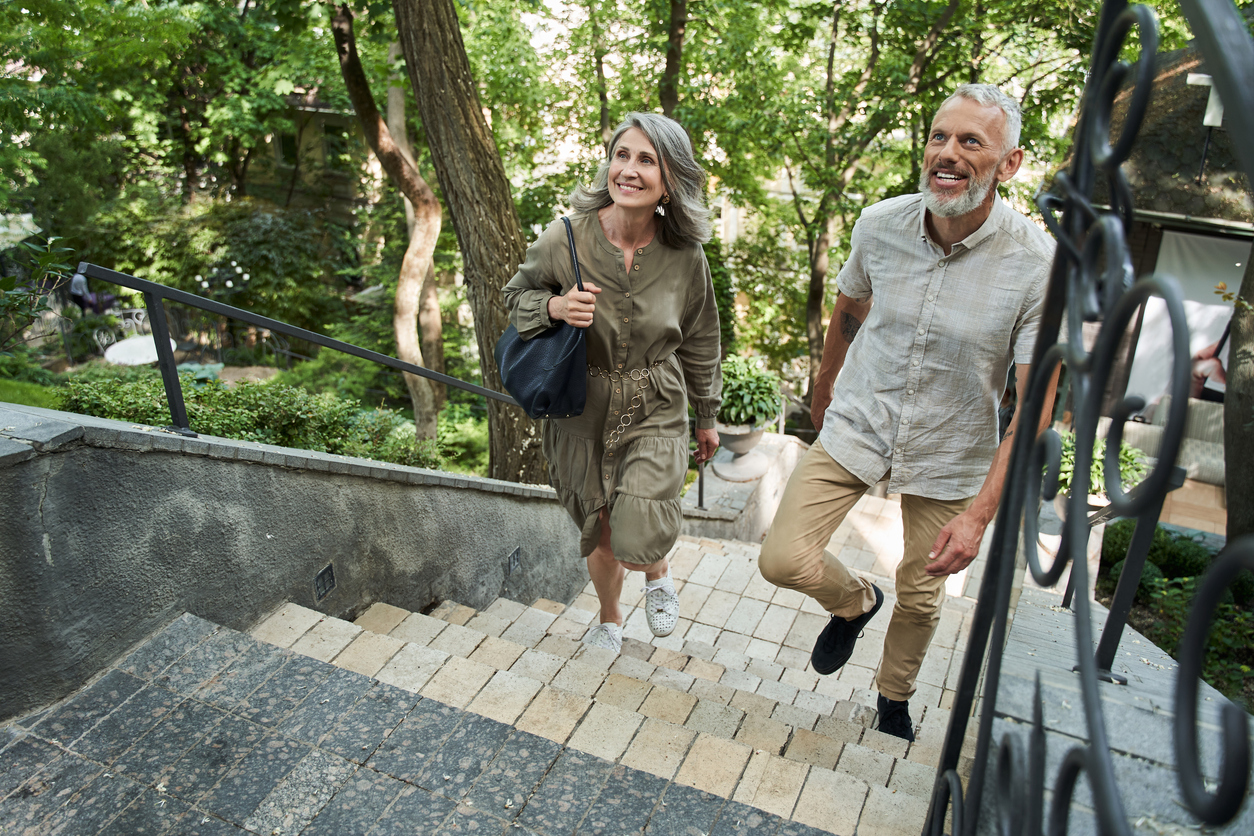
Examples of VILPA might include: a) carrying a load like grandchildren or groceries or shopping bags; b) vigorously playing with grandchildren or pets; c) stair climbing; d) bursts of very fast walking; e) vigorously walking up inclines or small hills; f) intense house work like vigorous cleaning, vacuuming or mopping.
THE VILPA STUDY: THE ASSOCIATION OF VILPA WITH MORTALITY OUTCOMES
Dr. Stamatakis’s 2022 study published in Nature Medicine, is interesting and notable because it followed non-exercisers – the subjects only PA came from ADL, not structured exercise sessions. Daily activity was tracked for a time period at the beginning of the study, with later follow up showing that 88% maintained no leisure-time structured exercise, just ADL.
There were 25,241 subjects (56% female) from the UK Biobank cohort. Average age was 62, so these were mostly older adults. They were followed for 7 years to monitor deaths from cancer, cardiovascular disease (CVD) and all-causes (ACM).
A multitude of variables were statistically adjusted to prevent reverse causation bias and/or confounding influence (results distortion) from factors that might affect health outcomes or influence VILPA activity (1).
VILPA bouts were counted & categorized if they lasted for at least a minute (92.3%), with some lasting up to 2 minutes (97.7%); this allowed VILPA bouts to be “length-standardized” at 1-2 minutes.
The median VILPA daily duration was 4 minutes and the maximum was 16 minutes. The median VILPA daily frequency was 3 length-standardized bouts and the maximum daily frequency was 11 length-standardized bouts.
11.2% of subjects recorded no VILPA at all.
Notable Findings:
1) At the median VILPA frequency of 3 length-standardized bouts per day, there was a 38-40% reduction in cancer & ACM and 48-49% reduction in CVD mortality.
2) At median VILPA daily duration of 4.4 minutes there was a 26-30% reduction in cancer & ACM and a 32-34% reduction risk of CVD death.
3) There was a nearly linear dose-response to VILPA – meaning as the amount of VILPA time increased (dose), there was a corresponding decrease in risk of death from cancer, CVD, and all causes (response). See here & here for a graphical representation (2).
VILPA STUDY LESSONS & COMMENTS
*If it’s vigorous & challenging for you, all activity counts regardless of setting, circumstance or time-length – our bodies can’t tell the difference. This is so encouraging and means we have CHOICES; look to have a challenge mentality and be aware of opportunities throughout your whole day and the intention to take advantage of them.
* 4 VILPA minutes a day for a 30% reduction in the risk of all-cause mortality and cancer? And a 34% reduction of CVD risk of death? Yes, please! Almost too good to be true, right? But such is the power of vigorous PA. As they say in the study: “The results are striking, but plausible”.
* And the benefits increase in a dose-response relationship to VILPA – 6 minutes a day (3 length-standardized bouts per day) for 40%-50% reduction in mortality. Powerful stuff, this VILPA. Look to develop an intension to create some challenging intensity with life’s daily movements whenever & wherever they come up…
* The median VILPA daily duration of 4.4 minutes per day is only 31 minutes of vigorous PA per week! That’s not a lot of time invested, especially considering VILPA are activities you’re likely to do anyway since they’re imbedded into your daily life (just with perhaps less intensity for some of them if you don’t look to challenge yourself).
Footnotes:
(1) To reduce the possibility of reverse causation through pre-clinical or undiagnosed disease, the study excluded those with a health event within the first 2 years of follow-up. Also excluded were those with existing CVD or cancer at baseline. Outcome data were also adjusted for age, sex, daily duration of light or moderate-intensity PA, adjustment for daily duration and frequency of vigorous-intensity PA bouts lasting more than 1 to 2 min, smoking, alcohol, accelerometry-estimated sleep duration, fruit and vegetable consumption, education, parental history of CVD and cancer, and medication use (insulin, blood pressure, cholesterol).
(2) “HR” in the graphs refers to “Hazard Ratio”, which is a measure of the effect size from a treatment or intervention or exercise – in this case VILPA. An HR greater than 1 would mean more deaths with VILPA (which didn’t occur) and a HR less than one means less deaths, which is the case with this study. The HR ratio indicates the percentage reduction in deaths – an HR of 0.80 means a 20% reduction, an HR of 0.50 would mean a 50% reduction in deaths and a HR of 1.2 would mean a 20% increase in deaths from a treatment or intervention.

Related Posts


