Summary: Walking is very important for older adults (OAs) and that's why this is my…
THE IMPORTANCE OF DOING FAST THINGS
SUMMARY: Previously, I’ve discussed many exercise & physical activity strategies to help older adults (OAs) age better and reduce mortality risk. In this post, I discuss a recent study by a well-known researcher that examined the mortality risk reduction of several thousand participant’s muscle strength (ability to produce force) vs. muscle power (ability to produce force with speed). The results were notably one-sided: muscle power is strikingly more important for mortality risk reduction than strength; nearly 600% more for men and 700% more for women. Below, I also cover some key points to be aware of regarding the physical decline experienced by aging adults. And, I discuss the most accessible way for OAs to self-assess their muscle power and some general concepts for training power. Lastly, I outline a few “low hanging fruit” options of specific exercises for training muscle power – exercises that have a low barrier for entry, yet also a big potential payoff.
INTRO
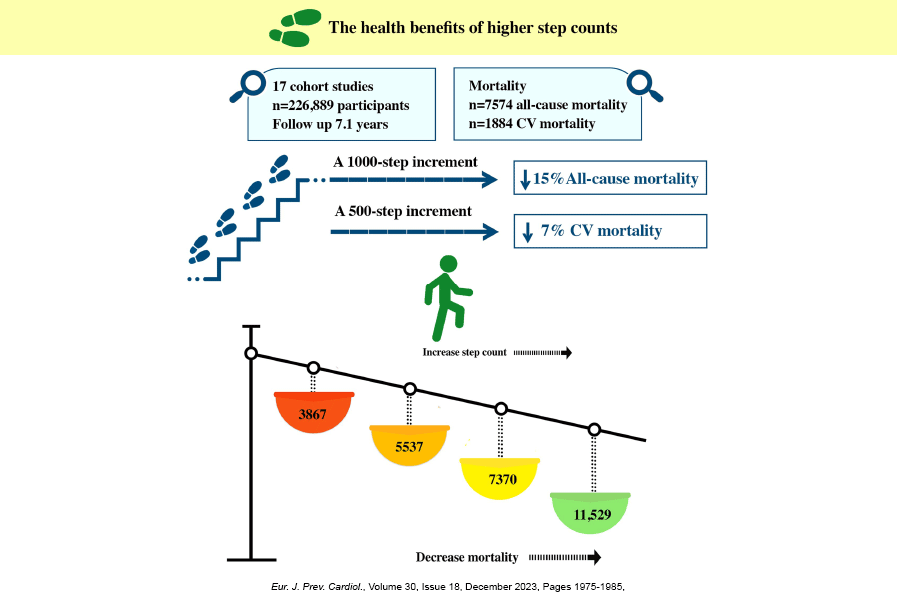
Study the impact of physical activity (PA) & exercise on aging/longevity, and you realize there are many physical avenues to help us age better or reduce our mortality risk. I’ve previously discussed why maximizing our aerobic fitness levels is key. I’ve also outlined how just incrementally improving our current aerobic fitness levels also seems to be quite significant. And, even more achievable, just getting out of the “sedentary lifestyle” category is protective, as evidenced by the strong association between daily-step-counts and mortality risk reduction. And if you include brief daily bouts of moderately vigorous PA of any type, then additional benefits accrue for positive life-enhancing effects – see here and here for details.
Looking at other physical areas besides walking or aerobic fitness capacity, I’d home in on neuromuscular system function because it’s likely of equal importance as aerobic capacity for positive aging potential. For example, having “enough” muscular strength to create a significant strength “reserve capacity” is essential to age well, maximize your “fun” factor and avoid physical dependence and frailty until the last possible moment.
Today’s post expands on the strength concept by examining what it means for our longevity potential when we have a robust muscular power capability. Power is related to strength, but is a different neuromuscular quality – it’s the ability to express strength with speed.
The common aging term “sarcopenia” is often considered to refer to how much muscle mass we have, as that’s how sarcopenia was originally framed. But current professional/medical usage places more emphasis on the functional quality of muscle tissue like how well our neuromuscular system performs to meet the demands of everyday life. This muscle mass vs. quality distinction is important because neuromuscular quality, not muscle mass, is what affects protective or deleterious functional outcomes (1). Our neuromuscular performance includes strength (force-generating potential), power (producing force with speed), and dynamic balance (adjusting base of support & center of gravity while moving or reacting to destabilizing forces).
SOME KEY POINTS REGARDING THE PHYSICAL DECLINE WITH AGING
With regard to OA’s physical decline with aging, we know that:
1) Muscle mass, strength and power decline steadily with age
3) The trajectory of these physical declines with aging are not fixed – they can be attenuated or accelerated because our neuromuscular system responds to the physical stimulus it is regularly given (or not given, in the case of being sedentary or having a disuse event).
4) Much more important than raw muscle mass is how our neuromuscular system functions in response to the demands of life – can our neuromuscular system express force (strength) or speed (power) when it is needed? For example: Rise quickly from a chair; cross a street in a safe amount of time; save ourselves from a fall by reacting quickly if we trip or are jostled; ascend a flight of stairs without stopping or struggling; carry a bag of groceries.
5) For OAs, without question the most important and impactful physical stimulus to favorably alter the functional trajectory of the neuromuscular system is repeated high-effort resistance exercise (RE), often called “strength training” or “weight training”. Key point: That’s why high-effort RE is non-negotiable to age well and stay independent…
THE STUDY: MORTALITY RISK REDUCTION OF MUSCULAR POWER VS. STRENGTH
This study asks the question: Which is more protective for risk of death, muscular strength or power? Spoiler alert – it’s not even close – in this study, power is strikingly more important for mortality risk reduction than strength; nearly 600% more for men and 700% more for women.
The lead author of this study, published in the Mayo Clinic Proceedings, is Dr. Claudio Gil Araujo, MD, PhD. Dr. Araujo is a founder and long-time medical director of CLINIMEX, in Copacabana, Rio de Janeiro, Brazil (nice). He is a physician-researcher, an expert in exercise medicine, and well-know, perhaps famous, for things like the “sitting-rising test study”, the “10-second balance study”, and the Flexitest assessment.
This study used the CLINIMEX Exercise prospective cohort for study participants, which Dr. Araujo & colleagues have been assessing & studying since 1994. There were 3,889 subjects aged 46 to 75 (mean age =59 years & 68% were men) and they were followed for an average of 11 years. Potential subjects were excluded if not free of chronic disease or musculoskeletal injuries. Deaths due to Covid-19 in this cohort were excluded from the study.
Upper body power was measured with an upright vertical row movement on a FitroDyne device. Upper body strength was measured via a standard handgrip dynamometer. Handgrip strength is the most common “strength proxy” used worldwide, especially in a clinical setting, but note it is not a direct measure of strength of the same upright row movement as power was assessed (which is a potential criticism of the study). Both power & strength measures were adjusted for body weight, making them relative measures.
Once strength & power were assessed, subjects were stratified into four low-to-high groups based on the subject’s relative strength & power, and results were adjusted for confounding variables like age, medical history, waist-to-hip ratio, and multiple other potential confounding “comorbidities”.
Notable Findings:
1) For relative muscle power, men in the lowest group had 5.88x (588%) greater risk of death compared to men in the highest group.
2) For relative muscle strength, men in the lowest group had 62% greater risk of death compared to men in the highest group. However, this finding failed to reach statistical significance (a measure of the likelihood of a finding not being due to chance).
3) For relative muscle power, women in the lowest group had 6.9x (690%) greater risk of death compared to women in the highest group.
4) For relative muscle strength, women in the lowest group had 71% greater risk of death compared to women in the highest group. However, this finding failed to reach statistical significance.
5) Risk prediction analyses showed that relative power had a significantly greater improvement in predictive accuracy compared to relative strength.
Peer Commentary:
In an accompanying editorial, The Need for Speed: Improving Muscle Power for Longevity, Drs. Salvatore Carbone & Windy Alonso, point out that “a recent meta-analyses of randomized controlled trials including 566 OAs suggested that power training might provide greater functional benefits than traditional strength training”. Their commentary contains this summarizing quote: “instead of merely asking, How much can you lift? Clinicians should also consider asking, How fast can you lift it?”. I recommend you check out their informative graphic regarding the physical/lifestyle determinants of longevity.
Caveats & Discussion:
1) The power test was a dynamic (movement) test, while the strength test was a static (no movement) test of different muscles. Perhaps this made a difference in the big spread between power & strength mortality risk reduction.
2) As I covered in my Intro and previous posts, high aerobic fitness levels produce almost as big a magnitude gains in mortality risk reduction from highest to lowest levels as this power/strength study. But this study didn’t measure aerobic fitness, so it’s impossible to say if these power mortality risk reductions would hold up in a cohort of individuals who also have high aerobic fitness.
SELF-ASSESSING MUSCLE POWER IN OAs
I’ve covered in detail the 5x Sit-to-Stand test and how to interpret your 5xSTS capability. This is the most accessible way for OAs to get a handle on their present muscular power. Indeed, Dr. Araujo recommends the STS test in this video where he discusses his current study.
TRAINING TO DEVELOP GREATER POWER IN OAs – GENERAL CONCEPTS
1) Perform RE regularly for strength improvement for a period of time first before starting power training – perhaps 1-3 months.
2) Key Point: The most important factor with power training is your intention to move quickly on the accelerated portion of your movement/lift – for example, the upward portion of the STS.
3) Think “fast first” if you’re combining a RE strength workout with some power training – do your power training when you’re fresh – but don’t exclude some “movement preparation” and warmup before your power training.
4) Before expressing your maximum velocity with a movement, make sure you’ve rehearsed the movement at a slow tempo first, then take an additional 3-5 reps or more to gradually build up your speed as a specific preparation.
5) Keep external resistances low; for OAs this often means starting with body weight. Next up, closed-loop long elastic resistance bands (resistance changes by varying thickness of band) work very well as an entry point for resistance beyond body weight for high-velocity STS and squats because there is no inertia or momentum to deal with like conventional “weights”. The bands are looped under feet and held in both hands at chest level. If you are holding a dumbbell or kettlebell, it should be held at chest level too.
6) Keep repetitions low as well – generally 3 to 6 reps per set of reps.
7) You can perform 1 to 5 sets, being sure to get enough rest in-between sets.
8) Make sure you can perform the power training movement pattern with good form & confidence at a slow tempo before trying to add velocity – that’s where some previous RE training is particularly helpful.
TRAINING TO DEVELOP GREATER POWER IN OAs – SPECIFIC EXERCISES FIRST STEPS
1) High-Velocity Sit-to-Stands
Read this STS post first so you are well informed about STS training basics.
Important: For power training utilizing the STS, it may require adjusting the height of the chair/platform above 17-18” used for 5x STS Test. This is because the “minimum resistance” is your body weight, which can’t be modified downward, so you may have to modify your range-of-motion via chair height to perform high-velocity STS appropriately.
These are “high-velocity STS” – you’re looking to explode off the chair with maximum vertical velocity intent by standing up as fast as possible (always sit back down slowly).
Perform 3-6 reps for 2-5 sets and remember the key point is it’s the intention to move fast that counts, not your absolute speed. Get the job done repeatedly with intent to produce maximal speed on the upward movement and you will gain power!
2) Butt-touch high-velocity squats
A “squat” starts & finishes on your feet, so it’s the opposite movement as a STS and is considered a progression from the STS because of the increased balance & stability requirements. “Butt-touch” means you’re descending slowly to a specific reproduceable height, pausing/hovering without actually sitting, and then exploding upward each rep. You may be capable of descending to a conventional 17-18” chair, or even lower, or you may need to start higher than a conventional chair by placing pillows or pads on chair. Key point is that it’s doable for you with body weight to start the power training process with this pattern.
3) Forward Rescue Steps – Train rapid, quick first step capability
You develop rapid first step capability with forward rescue steps practice. I’ve covered them here and here – it’s the ability to get your foot in front of you quickly. Successful & effective rescue steps save you from a fall if you trip on anything while walking, so this is quite a useful & protective power capability.
4) Other power training options for OAs:
OAs have a very broad range of potential physical & medical limitations and capabilities, so it’s impossible for me to suggest which next steps would be appropriate for you. Options 1-3 above are “low hanging fruit” that have a low barrier for entry, yet also a big potential payoff.
Dr. Cody Sipe, in his book Quick Functional Exercises for Seniors, which I’ve previously reviewed here, says “Power movements typically fall into four categories: Lifts; Throws; Jumps; and Start/Stop”. Pages 55 to 58 cover some power training concepts for OAs that he considers important.
In my OA professional practice (and my own training), I include movements/exercises like: power step ups; squat thrusters; push presses; upward-only box jumps from floor to low platform; medicine ball throws; kettlebell swings & snatches; dumbbell snatches; kettlebell/dumbbell/sandbag cleans; low amplitude “pogos” (like jumping rope without the rope); and various multi-directional jumps & hops. That’s not an exhaustive list; I have my favorites, but the key point is that when they are implemented with an OA, all are individualized for the OA in front of me based on their physical capabilities, needs, medical issues, and prior training.
Footnotes:
(1) Risk of falls; fall-related fractures; loss of independence due to the inability to perform activities of daily living; decreased walking speed or ability; decreased tolerance for physical activity; long-term quality of life; frailty.

Related Posts